RSC’s ‘Julius Caesar’ Reimagined in Women’s Prison Setting for School Tour
The Royal Shakespeare Company has launched a modern adaptation of 'Julius Caesar' presented as if performed by inmates of a women’s prison. Directed by Phyllida Lloyd and featuring an all-women cast, the production tours secondary schools this autumn before moving to The Other Place in Stratford-upon-Avon.
The Royal Shakespeare Company (RSC) has unveiled a sharply contemporary production of William Shakespeare’s 'Julius Caesar,' reimagined through the lens of a women’s prison. Directed by Phyllida Lloyd, the adaptation features an all-women cast and is currently touring secondary schools across the United Kingdom before its run at The Other Place in Stratford-upon-Avon.
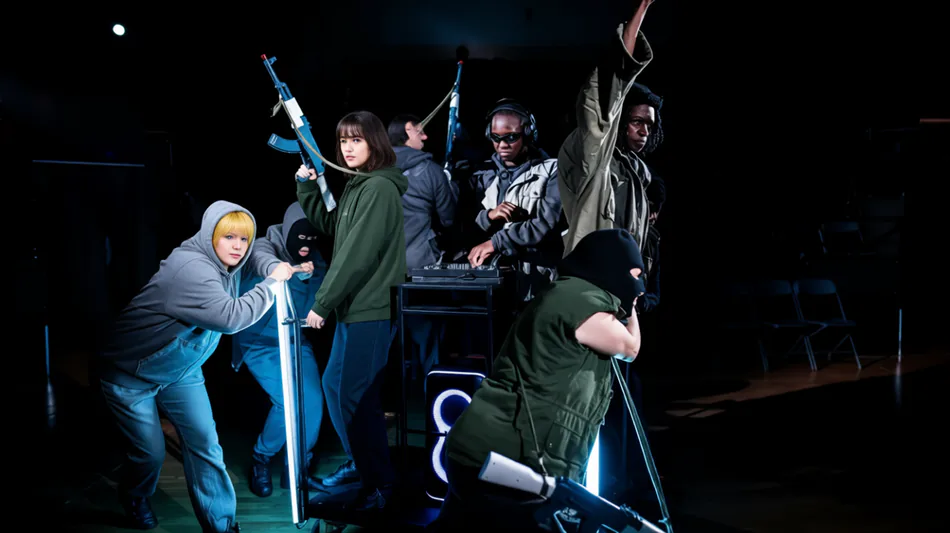
Presented as though performed by inmates, the staging leans heavily into its penal setting. The atmosphere is described as dark and moody, punctuated by choreographed brutality, the frenzied beat of techno music, and strobe lighting. This aesthetic choice serves to accentuate the play’s exploration of male domination, both physically and psychologically, while adding a new dimension to the narrative’s violence.
The production targets secondary school audiences with a shortened adaptation designed to address age-old issues that remain relevant to young people today. The source material highlights themes of gang rivalry, knife crime, and violence, though in this context, these gangs are depicted as hidden behind balaclavas rather than traditional period costumes. Performers wear casual clothing such as hoodies, jeans, and vests, further distancing the production from historical realism.
At a macro level, the narrative mirrors current political climates where charismatic leaders receive exaggerated homage and cults of personality influence power structures. The plot follows Caesar’s expansion of authority after military victory, prompting a conspiracy led by Cassius. Brutus, torn between his love for Caesar and his loyalty to the Roman Republic, ultimately sides with the conspirators. Following Caesar’s assassination, Mark Antony promises revenge, setting the stage for civil war.
The production emphasizes the power of oratory as Brutus explains his motives and Antony presents a counter-narrative. The crowd shifts its allegiance rapidly between the two speakers, illustrating the volatility of public opinion. Despite the modern staging, the adaptation remains faithful to Shakespeare’s text, avoiding pandering to younger audiences and retaining the weight of lengthy speeches.
The ensemble cast delivers distinct character interpretations. Jackie Clune portrays Caesar as a figure who veers from bullying anger to humor. Harriet Walter plays Brutus as self-reflective and loving toward his wife Portia and servant Lucius. Jenny Jules’s Cassius is depicted as fearless yet impetuous, while Leah Harvey’s Mark Antony is characterized as an unpredictable firebrand.
Rachel Frank, an artist and facilitator, worked with members of the HMP New Hall drama group and the Julius Caesar company during the 2026 tour. This collaboration aimed to explore how the characters, plot, and themes connected with the lived experiences of the incarcerated drama group. The production is a co-production between the Donmar Warehouse and KPPL Productions.
Sound design by Pete Malkin, building on original work by Tom Gibbons, integrates techno elements to underscore the tension. The final scene includes a cry from an inmate suggesting that their voices have not been heard, a moment interpreted as representing the silenced voices of women.
Julius Caesar is part of the RSC’s First Encounters initiative. It toured secondary schools during autumn 2026 and continues its run at The Other Place in Stratford-upon-Avon until November 28. Further information regarding the production is available via the RSC website.
M.Albrecht--VZ