Lebanon village wants army protection from Israel, Hezbollah / Photo: Rabih DAHER - AFP
After narrowly escaping death in her border village, Myriam Nohra is among the people in south Lebanon imploring the army for protection from the war between Israel and Hezbollah.
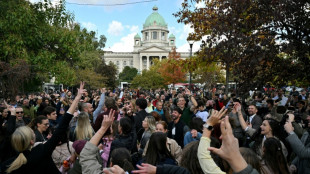
In Christian-majority Qlayaa, which overlooks a vast green plain separating Lebanon and Israel, hundreds of people buried their parish priest Father Pierre Rai on Wednesday, two days after he was killed by Israeli shelling while inspecting the site of an attack.
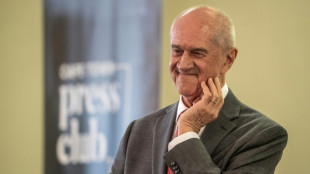
Army commander Rodolphe Haykal, who came to the church, faced angry residents who called on the military to bolster its presence in the border area, stop Hezbollah fighters from launching rockets near their village, and to ensure locals can remain.
Dressed in black, 34-year-old teacher Nohra told AFP that just hours after Rai's death "a Hezbollah rocket fell over our heads after going off course towards Israel" as her family slept.
She, her husband and two children "survived by a miracle".
"I ran like crazy looking for (the children) in their room. I couldn't believe they were alive," she said, her voice trembling.
"I can't describe the destruction to the house or the trauma they went through."
Until days ago, Qlayaa had been spared the regional war that Lebanon was drawn into last week when Hezbollah attacked Israel in response to the killing of Iranian supreme leader Ayatollah Ali Khamenei in US-Israeli strikes.
Israel, which had kept up strikes in Lebanon even before the war despite a 2024 ceasefire with Hezbollah, has since launched air raids across the country and sent ground troops into border areas.
- 'We'll stay' -
Rai's death and the rocket that hit Nohra's home have heightened fears in Qlayaa, where like in some other Christian villages near the border, residents are refusing to leave despite sweeping Israeli army evacuation warnings.
"What price have we paid today and for who? We've never harmed anyone in our lives. We only want to live in our village in peace and safety," said Nohra as the sound of prayers mixed with aircraft noise overhead.
Following the ceasefire that sought to end the previous hostilities between Israel and Hezbollah, the Lebanese army had bolstered its presence near the Israeli border and dismantled Hezbollah infrastructure there.
But the army withdrew from several border positions last week as Israel launched its new strikes and incursions.
South Lebanon has long been a stronghold of Hezbollah, a Shia Muslim movement backed by Iran, and which gained much of its legitimacy from providing protection and services to a community that had long been sidelined.
And while the majority of south Lebanon's residents are Shia, not all of them support Hezbollah, and side by side with Muslim villages are communities of other faiths, including Christians.
For many years, Hezbollah was believed to have an arsenal bigger than the army's but Nohra, like many in the south, blamed the military for failing to protect residents.
If the military were carrying out its duty, she said, "nobody would be able to launch rockets around us".
Resident Manal Khairallah said she told Haykal that "we want no more blood."
"I asked the army commander to do his job," she said.
"Our ancestors lived here. We grew up here and we'll stay here," she said.
- 'Enough' -
"We blame the state in its entirety," she said angrily.
"We are peaceful and we don't want war."
Apostolic Nuncio to Lebanon Paolo Borgia, who attended the funeral, said he "shared the worries" of the residents and was trying "to find solutions".
Israel has issued warnings to all residents south of the Litani River, about 30 kilometres (20 miles) from the border, to evacuate, and has said it wants to create a buffer zone in Lebanon to protect residents of north Israel.
Khairallah said defiantly that "we will not leave our homes, no matter what happens."
"This war has nothing to do with us," said retired soldier Jihad Toubia, 73.
"Even if Israel sets up a buffer zone, we won't leave. Let them bury us here," he said.
Local official Habib al-Hage, 78, said that "the army and security forces are the only guarantee."
"We won't leave, even if they want to kill us," he said.
Teacher Doris Farah, 55, broke down describing her anxiety and sadness since the new war erupted.
"We are attached to our land... we want the army to protect us," she said.
"The south has sacrificed so much -- for us, it's enough. We just want to live with our children in peace."
M.Albrecht--VZ