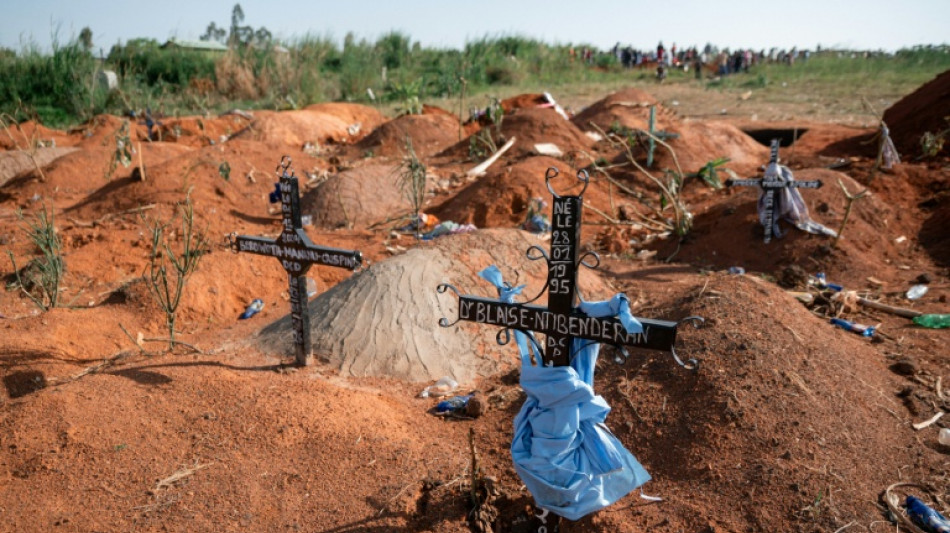
DR Congo health workers on Ebola front line threaten strike / Photo: Jospin Mwisha - AFP
Health workers fighting the Ebola outbreak in DR Congo are threatening to strike over unpaid wages, as the World Health Organization warned Tuesday the extent of the epidemic could be four times larger than reported.
The highly infectious virus has killed more than 700 people among the nearly 2,000 confirmed infected in the Democratic Republic of Congo since the outbreak was declared on May 15, according to the latest official toll published on Tuesday.
But the WHO said the scale of the outbreak could be two to four times the official estimates.
Complicating the response effort, health workers at the epicentre of the epidemic told AFP they had not been paid since the virus was detected.
At the Ebola treatment centre in Rwampara -- one of the worst-hit areas at the epicentre of the outbreak in the northeastern province of Ituri -- health workers burned tyres in protest on Monday and temporarily blocked access to the centre.
"We've been treating Ebola patients without pay since May 15. We continue to do so because that is our oath but we are working in very difficult conditions," doctor Pascal Bahoya told AFP.
Doctors at the centre said if the authorities did not heed their "48-hour ultimatum for salaries and bonuses" to be paid, they would launch a "full-scale strike" with no minimum service provided.
During a visit to Ituri on Thursday, Health Minister Samuel Roger Kamba acknowledged "delays in payment" and gave assurances that the "organisational issue" at the root of the problem would be resolved.
Health workers on the front line are struggling to keep up with the spread of the virus in the vast central African country, which is among the poorest on the planet.
At least 112 healthcare workers have been infected and 35 have died, according to the national public health institute (INSP).
- 'Much bigger than estimated' -
Ebola, a viral haemorrhagic fever that spreads through direct contact with bodily fluids, can cause severe bleeding and organ failure.
There is no vaccine or specific treatment available for the Bundibugyo strain of Ebola, which is causing the current outbreak.
It has now spread to five provinces in eastern DRC -- from the epicentre in Ituri to North Kivu, South Kivu, Tshopo and Haut-Uele.
Mineral-rich eastern DRC has been plagued by conflict for three decades. Many people have been displaced by violence and live in camps that the United Nations says lack clean water and sanitation.
Ituri borders South Sudan and Uganda, which has reported 20 cases, including two deaths.
As of July 12, 727 patients were being treated in Ebola treatment centres in the areas affected.
A clinical trial involving two treatments is currently underway.
The true scale of the outbreak -- which is believed to have begun several months before it was detected -- remains difficult to gauge.
Humanitarian workers on the ground have said they believe the official figures are underestimates.
WHO emergencies director Chikwe Ihekweazu told reporters in Geneva that the UN health agency's modelling indicated "the scale of the outbreak is at least two to four times the number of cases that we have found".
The international community has raised $1.5 billion to support the response in the DRC, whose healthcare system is chronically underfunded.
F.Braun--VZ