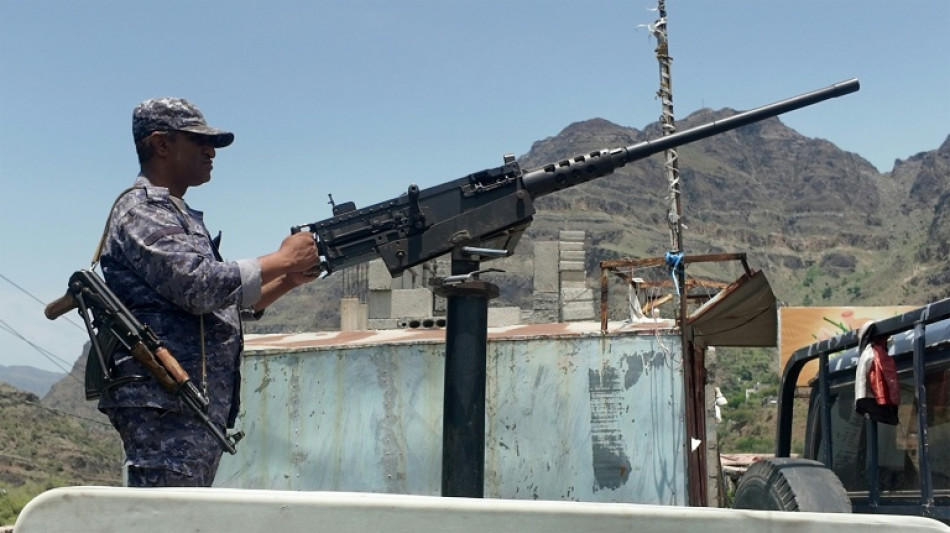
Houthis target Saudi base as Iran denies involvement in Yemen war / Photo: - - AFP
Yemen's Houthis launched a fresh barrage of missile and drone attacks on Saudi military targets on Monday, as Iran denied any involvement in the country's revived civil war.
The group, fighting the Saudi-backed, internationally recognised government, last week seized control of Yemen's Red Sea coast and the Bab al-Mandab Strait, which has become vital as the wider US-Iran war chokes the Strait of Hormuz.
The Houthis said they fired dozens of drones and missiles at the kingdom, prompting the Saudi Civil Defence to issue brief alerts in the neighbouring cities of Khamis Mushait and Abha.
A Khamis Mushait resident told AFP he heard "intense blasts" which left fires burning for a "long time".
"Honestly, we couldn't sleep at all."
The Bab al-Mandab waterway has become essential for Saudi oil exports, with Iran continuing to block the Hormuz strait as part of the Middle East war, but the Houthis have declared a maritime blockade on Riyadh.
The renewed fighting in Yemen comes as the wider regional war remains stalemated. On Monday, a proposed meeting between Gulf states and Iran over the future of Hormuz was postponed, with Tehran accusing Riyadh of using Yemen as a "pretext" to delay the talks.
Tehran has long supported the Houthis, a member of its anti-Israel "axis of resistance, including with weapons and technology, but analysts dispute the extent to which Iran is behind the renewed fighting.
"Iran does not interfere in Yemeni affairs," foreign ministry spokesman Esmaeil Baqaei told reporters on Monday, saying the Houthis are "entirely independent actors who make their decisions based on their own interests".
Iran has previously threatened to open "new fronts", including Bab al-Mandab, and the Houthi offensive has sent oil prices soaring once again, with the lengthy route through the Suez Canal and around Africa now the only secure route for Saudi oil to reach key Asian markets.
- 300 strikes in five days -
Yemen's prolonged civil war had been dormant for four years before bursting back into life in July over an Iranian flight to the capital Sanaa, as it became the latest conflict drawn into the wider regional war.
The Houthis' military spokesman Yahya Saree said Monday that the group's latest strikes targeted "fighter jet hangars, radars, runways, ammunition depots" at King Khalid Air Base in Khamis Mushait, in retaliation for airstrikes by Riyadh.
He accused Saudi Arabia of carrying out "more than 300 airstrikes in the past five days" across Yemen.
Yemeni government forces on Sunday said they had recaptured positions in the southwestern province of Taiz from Houthi fighters and carried out airstrikes, telling the official Saba news agency they killed at least ten gunmen.
Last week, American media reported that US President Donald Trump had rejected a personal request from Saudi Arabia's Crown Prince Mohammed bin Salman, the kingdom's de facto ruler, to intervene in the war.
The Saudi crown prince received the commander of the US Central Command, Admiral Brad Cooper, in Jeddah on Monday to discuss "the latest developments in the region", according to Saudi news agency SPA.
The US admiral travelled to Saudi Arabia on Thursday for urgent coordination meetings, according to US news site Axios.
The Houthis, whose heartland is among Yemen's Zaidi Muslims in the country's north, seized the capital Sanaa in 2014 at the outset of the civil war, driving the government to Aden in the south.
The following year, Saudi Arabia led a coalition to intervene on the side of the government, launching wave after wave of airstrikes as the conflict escalated into one of the worst humanitarian disasters in the world.
In 2025, the United Nations warned that 17 million Yemenis were struggling to eat and a further million faced extreme hunger.
On Sunday, the UN's migration agency said the renewed fighting in the Arab world's poorest country had forced 86,000 people to flee their homes, with the number jumping by 10,000 in just a day.
More than 2,000 people had fled across the Bab al-Mandab to reach Djibouti in Africa, the International Organization for Migration said.
V.Zimmermann--VZ