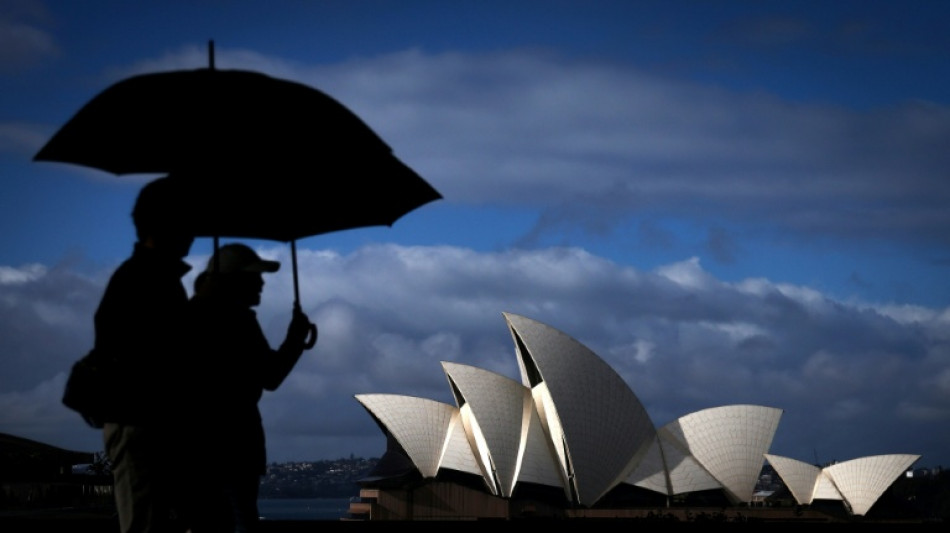
Australia to cut migration to fix housing crisis: minister / Photo: DAVID GRAY - AFP/File
Australia will reduce migration by curbing "visa hopping", tightening rules on students and working holiday makers as well as cracking down on overstayers, its interior minister said Thursday, as the far-right surges in the polls.
Home Affairs Minister Tony Burke told the National Press Club in Canberra that immigration was "fundamentally a strength" for Australia, but accepted that housing pressures required changes.
He denied his ruling Labor party was tightening visa rules in response to the rise of One Nation, which has become one of the country's most popular parties this year with pledges to drastically slash migration. Business groups warned such cuts would cause economic damage.
"We need immigration to soften enough that housing has a chance to catch up," he said, while stressing the housing shortage was not caused by migrants.
Net overseas migration -– the net gain or loss to the population through movement to and from Australia -– reached a peak of 538,000 in 2022 after a surge in arrivals when borders re-opened after the Covid-19 pandemic.
Numbers fell to 292,100 in the year to March, data on Thursday showed.
Burke said this was 47 percent below the post-Covid peak -- and that policy changes would help to reach a target of 225,000 for next year.
Australians want to know the government was "taking control" of migration but also "being decent about it", he said.
Students are the largest group of arrivals, with 753,000 international students in Australia, most from China and India, data shows.
Under the new rules, family members seeking to join students in Australia will face new curbs and it will become harder for students to move between courses to extend their stay, Burke said.
A backlog of applications from the UK for working holiday visas would continue to be processed slowly after a record 80,000 applications -- a matter that is under discussion with the UK government, he said.
Working holiday makers in rural areas will enter a ballot to stay for a second or third year, with just 5,000 visas available for the latter.
Family members seeking to visit Australians will have "no further stay" conditions attached to their temporary visas.
Migrants with construction and housing skills will be prioritised for visas, he said.
Australia would return to a policy of a decade earlier in which visa overstayers were given two weeks to leave the country or face detention and deportation, he said.
An additional 100 compliance officers and 250 more beds in immigration detention centres would show there are consequences to overstaying a visa, he said.
But he stressed "this is not the sort of operation that some people have seen on TV happening in other countries" -- a nod to hardline immigration policies in the United States.
A third of Australia's resident population of 27.6 million was born overseas, the latest census data shows.
M.Albrecht--VZ